B‑29 Superfortress: From WWII to the Korean War – Missions, Innovation, and Heroism
“We weren’t just flying a plane; we were carrying history and the lives of our crew with us.” — Lt. Col. James Turner. The B‑29 Superfortress was more than an aircraft—it was a symbol of courage, innovation, and human endurance. From World War II to the Korean War, every sortie carried the weight of strategic objectives and the lives of its airmen.
Table of Contents
- Introduction: The Evolution of a Legend
- World War II Operations: Strategic Bombing and High Stakes
- Korean War Operations: Adaptation and Survival
- Crew Diaries: Voices Across Two Wars
- Design and Innovation: Technological Marvels
- Missions and Risks: Human Courage in Action
- Lessons Learned: Endurance, Ingenuity, and Teamwork
- Quick Facts & Timeline
- Legacy and Influence: Shaping Modern Aviation
- Top 5 Frequently Asked Questions
- Final Thoughts
- Resources
Introduction: The Evolution of a Legend
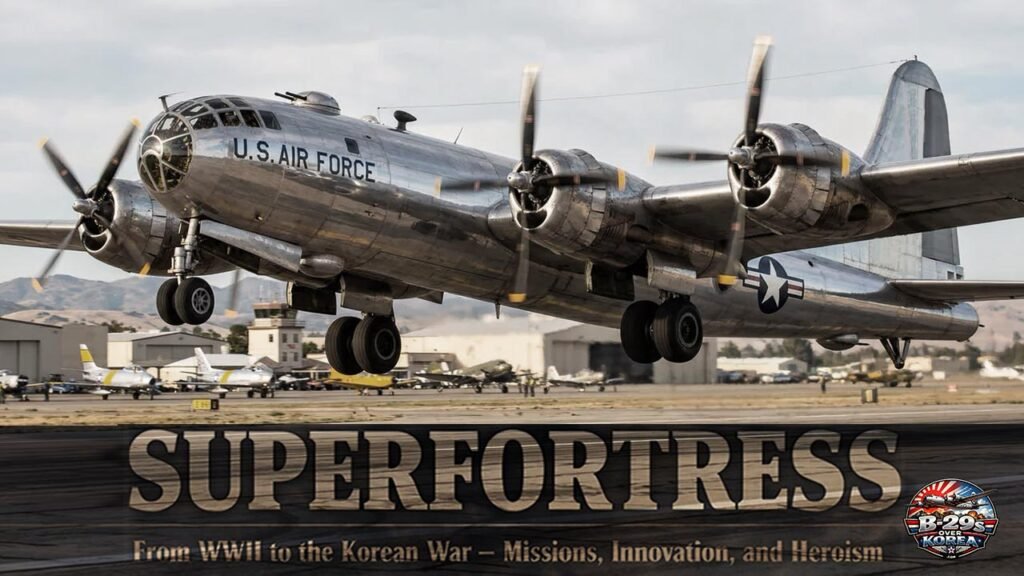
The Boeing B‑29 Superfortress first rose to prominence in World War II as a game-changing strategic bomber. Its advanced technology, long range, and large payload capacity allowed the Allies to strike deep into enemy territory. After WWII, the B‑29 returned to service during the Korean War, adapting to new challenges, including jet-age adversaries, rugged terrain, and night operations.
Lt. Col. James Turner’s words remind us that every mission carried more than ordnance—it carried the lives of airmen and the weight of history. From the Pacific skies in 1945 to Korean valleys in the early 1950s, the B‑29’s legacy is intertwined with human courage and technological innovation.
World War II Operations: Strategic Bombing and High Stakes
During WWII, the B‑29’s capabilities enabled bombing campaigns that changed the course of the Pacific theater. Missions targeted Japanese cities, factories, and military installations, pushing crews to extreme altitudes and long flight durations.
Key aspects included:
- High-altitude operations: Pressurized cabins allowed flights above 30,000 feet, avoiding many anti-aircraft threats.
- Advanced targeting: Analog fire-control computers and remote gunnery systems allowed precise bomb deployment and improved survival for gunners.
- Payload flexibility: B‑29s could carry conventional bombs, incendiaries, or even nuclear weapons, emphasizing strategic versatility.
Crew experiences were intense. Diaries reveal moments of fear and camaraderie: pilots coordinated with navigators, gunners watched the skies, and engineers managed complex engines—all while maintaining focus under extreme pressure. Historical accounts report a 10–15% casualty risk on high-intensity missions, highlighting the bravery required. The bomber’s role culminated in missions over Hiroshima and Nagasaki, cementing its place in history.
Korean War Operations: Adaptation and Survival
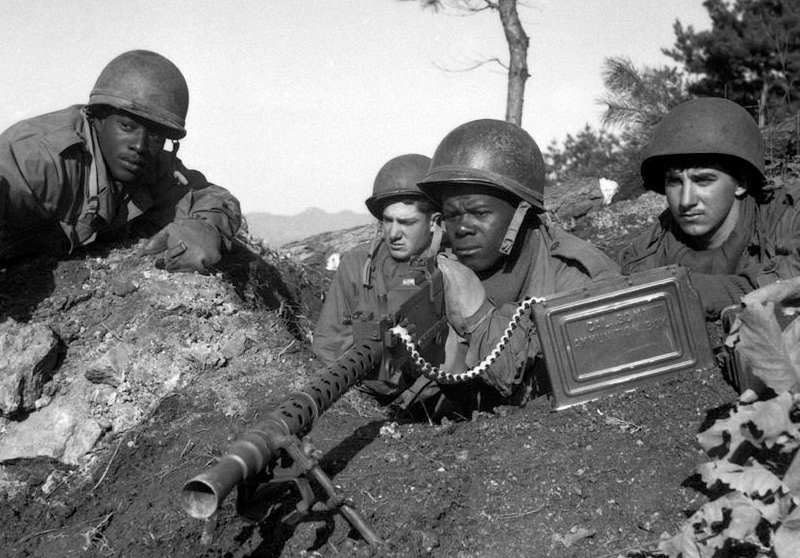
The Korean War presented a different battlefield. B‑29s operated in mountainous terrain, facing new anti-aircraft defenses and jet fighters like the MiG-15. Night bombing, napalm missions, and long-range sorties tested both aircraft and crew.
Key adaptations included:
- Improved engines and structural reinforcements: Ensured survivability on longer missions carrying heavier payloads.
- Radar and navigation systems: Early airborne radar enabled night missions and poor-visibility operations.
- Payload innovation: Napalm and conventional bombs were used strategically against supply lines and infrastructure.
Crew diaries reflect the human dimension: fear of ground fire, the strain of extended missions, and reliance on teamwork to survive. Humor, personal rituals, and letters home helped sustain morale in the cold, high-altitude cockpit.
Crew Diaries: Voices Across Two Wars
Personal accounts bring B‑29 missions to life:
- WWII Pilot John Andrews: “Engines roared like beasts, but every lift-off was awe-inspiring. We knew each life onboard mattered.”
- WWII Bombardier Samuel Ortiz: “Releasing bombs at 30,000 feet was surreal—one mistake could be catastrophic.”
- Korean War Pilot James Turner: “Flying low over valleys, mountains seemed to loom. Survival demanded focus and trust in my crew.”
- Korean War Flight Engineer Samuel Park: “Engines sputtered, systems failed—we improvised, every flight a test of skill.”
Across both wars, crew diaries emphasize courage, improvisation, and bonds forged under life-or-death pressure.
Design and Innovation: Technological Marvels
The B‑29’s technological features evolved across wars:
- Pressurized cabins: High-altitude operation with reduced fatigue.
- Remote-controlled turrets: Protected gunners while improving accuracy.
- Advanced radar and navigation: Crucial in Korean War night bombing missions.
- Engine improvements: Reliability in extreme conditions, addressing early overheating issues.
Innovation balanced human safety with strategic capability, allowing B‑29s to adapt to two very different wars.
Missions and Risks: Human Courage in Action
High stakes defined B‑29 missions. WWII crews faced anti-aircraft fire and extreme altitudes, while Korean War crews contended with jet fighters, terrain hazards, and mechanical stress.
Casualty rates were significant in both conflicts, but planning, teamwork, and technical skill often determined survival. Diaries reveal the psychological toll: the tension before enemy territory, fatigue, and constant vigilance shaped airmen’s daily lives.
Lessons Learned: Endurance, Ingenuity, and Teamwork
Key takeaways from B‑29 operations include:
- Adaptability: Crews responded to mechanical and environmental challenges in real time.
- Teamwork: Coordination among 11 crew members was essential.
- Endurance: Long missions required mental and physical resilience.
- Innovation under pressure: Improvisation often determined mission success and survival.
These lessons shaped postwar aviation, bomber design, and aircrew training.
Quick Facts & Timeline: B‑29 Superfortress
| Year / Event | Significance |
|---|---|
| 1942 | Boeing begins B‑29 design to meet USAAF long-range bombing needs. |
| 1944 | First B‑29s deployed in combat in China and the Mariana Islands. |
| 1945 | Strategic bombing of Japan; Hiroshima and Nagasaki missions; crews face extreme altitudes and enemy fire. |
| 1950 | B‑29 returns to combat during the Korean War; adapted for napalm, night bombing, and mountainous terrain operations. |
| 1950–1953 | B‑29 crews execute high-risk sorties over North Korea; face MiG-15 jet threats, anti-aircraft fire, and extreme weather. |
| Post-1953 | Lessons from WWII and Korea influence Cold War strategic bomber design and aircrew training programs. |
| Legacy | Pressurized cabins, remote-controlled turrets, radar, and long-range capabilities inform modern aviation and military strategy. |
Key B‑29 Quick Facts
- Crew: 11 airmen per plane (pilot, co-pilot, navigator, bombardier, flight engineer, gunners, radio operator)
- Max Speed: 357 mph (575 km/h)
- Range: 3,200 miles (5,150 km)
- Service Ceiling: 31,850 ft (9,700 m)
- Payload Capacity: Up to 20,000 lbs (9,072 kg) of bombs
- Notable Armament: .50 caliber machine guns, remote-controlled turrets, napalm bombs (Korean War)
- Operational Theaters: Pacific WWII, North Korea
Legacy and Influence: Shaping Modern Aviation
B‑29 innovations influenced strategic bombers, high-altitude reconnaissance aircraft, and military doctrine. Lessons from both WWII and Korea informed:
- Development of Cold War-era bombers and surveillance aircraft.
- Aircrew training emphasizing stress management and teamwork.
- Advances in payload delivery, radar, and navigation systems.
The B‑29 represents a bridge between propeller-driven aircraft and the emerging jet age, with a legacy of technological and human achievement.
Top 5 Frequently Asked Questions
Final Thoughts
The B‑29 Superfortress embodies the intersection of human courage and technological brilliance. From the Pacific skies of WWII to the Korean valleys, its crews demonstrated endurance, ingenuity, and teamwork under extreme stress. Personal diaries reveal that every flight was a blend of fear, precision, and shared responsibility. Its legacy continues to inform aviation, military strategy, and the study of human resilience under pressure.
Resources
- Boeing Historical Archives
- National WWII Museum – B‑29 Superfortress
- U.S. Air Force Historical Research Agency – B‑29 Korean War
- Turner, J. “Flying History: Personal Accounts of B‑29 Missions,” WWII and Korean War Oral Histories Collection.

- Inside Two Wars: The Untold Stories of B‑29 Airmen - March 9, 2026
- B‑29 Museums in the U.S. - March 7, 2026
- The Enduring Power of USA Air Superiority - March 5, 2026