

What Caused the Korean War?
The Korean War, which erupted in June 1950, was one of the earliest and most consequential conflicts of the Cold War era. Often described as the first “hot war” of the Cold War, it involved not only the Korean Peninsula but also major global powers including the United States, the Soviet Union, and China. Understanding the causes of the Korean War requires examining the political, ideological, and historical forces that shaped Korea after World War II.
The war was not triggered by a single event. Instead, it was the result of layered tensions involving colonial history, the division of Korea, ideological rivalry between communism and capitalism, and geopolitical competition between superpowers. These forces created a volatile environment that ultimately led North Korea to invade South Korea in June 1950.
Table of Contents
- Historical Background: Korea Before the War
- The Division of Korea After World War II
- Cold War Ideology and Superpower Rivalry
- Political Conflict Between North and South Korea
- Kim Il-sung’s Ambition and the Push for Unification
- International Involvement and Strategic Calculations
- The Immediate Trigger: North Korea’s Invasion in 1950
- Global Implications of the Conflict
- Top 5 Frequently Asked Questions
- Final Thoughts
- Resources
Historical Background: Korea Before the War
To fully understand the causes of the Korean War, it is necessary to examine Korea’s history before the conflict began. For centuries, Korea existed as a unified kingdom with its own cultural identity and political structure. However, in the early twentieth century, the Korean Peninsula became entangled in imperial competition among powerful nations.
In 1910, Japan officially annexed Korea, turning it into a colony. Japanese rule lasted until the end of World War II in 1945. During this period, Japan implemented strict political control, suppressed Korean culture, and exploited Korean resources for its industrial expansion.
Although Japanese rule brought infrastructure and industrial development, it also generated widespread resentment among Koreans. Resistance movements emerged both inside Korea and among Korean expatriate communities. This legacy of colonial domination fostered strong nationalist sentiment, which later played a critical role in shaping postwar political movements.
When Japan surrendered in 1945, Korea was suddenly liberated but politically unstable. The collapse of Japanese authority left a power vacuum that competing global powers quickly moved to fill.
The Division of Korea After World War II
One of the most significant causes of the Korean War was the division of the Korean Peninsula after World War II. Following Japan’s defeat, Allied leaders needed a temporary administrative solution to manage Korea until independence could be established.
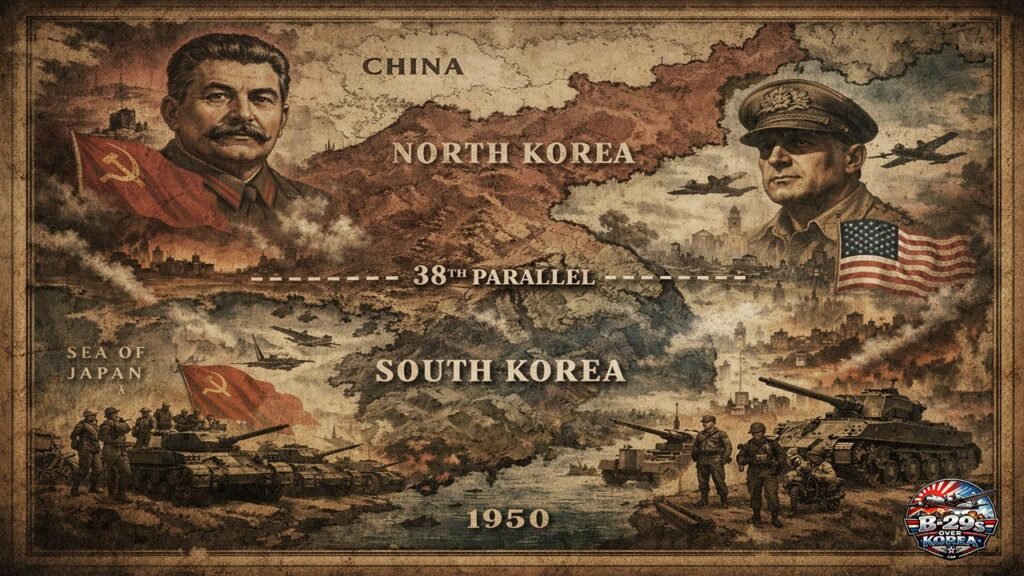
In August 1945, U.S. officials proposed dividing Korea along the 38th parallel. The Soviet Union would occupy the northern half, while the United States would administer the southern half. What was intended as a temporary arrangement soon hardened into a permanent division.
The two occupying powers implemented different political systems. In the north, the Soviet Union supported the establishment of a communist government led by Kim Il-sung. In the south, the United States backed an anti-communist government headed by Syngman Rhee.
By 1948, two separate states had formed:
The Democratic People’s Republic of Korea (North Korea)
The Republic of Korea (South Korea)
Both governments claimed to represent the entire Korean Peninsula. This mutual claim to legitimacy made conflict increasingly likely.
Cold War Ideology and Superpower Rivalry
Another major factor among the causes of the Korean War was the broader Cold War struggle between the United States and the Soviet Union. After World War II, global politics became polarized between capitalist democracies and communist states.
The United States promoted a policy of containment, which aimed to stop the spread of communism. The Soviet Union, meanwhile, supported communist movements and governments around the world.
Korea became a critical frontline in this ideological struggle. The peninsula’s location in East Asia gave it strategic importance near China, Japan, and the Soviet Far East.
The emergence of communist China in 1949 further intensified the geopolitical stakes. When Mao Zedong’s communist forces won the Chinese Civil War, the balance of power in East Asia shifted dramatically.
U.S. policymakers worried that losing Korea to communism could destabilize the region and threaten Japan, a key American ally. This concern later contributed to the rapid U.S. response once the war began.
Political Conflict Between North and South Korea
Internal political tensions between North and South Korea were another direct cause of the Korean War. Both governments sought to unify the peninsula under their own ideology and leadership.
Border clashes along the 38th parallel became increasingly frequent between 1948 and 1950. These skirmishes involved small military units and guerrilla forces crossing the border.
South Korea experienced political instability during this period. President Syngman Rhee maintained a strongly anti-communist stance but faced internal dissent and rebellion. Meanwhile, North Korea consolidated a centralized communist state with strong military support from the Soviet Union.
Each side accused the other of aggression. Both governments also believed that unification through military force was possible.
This environment of mutual hostility made the Korean Peninsula one of the most volatile regions in the early Cold War.
Kim Il-sung’s Ambition and the Push for Unification
North Korean leader Kim Il-sung played a crucial role in initiating the Korean War. A former guerrilla fighter who had resisted Japanese rule, Kim emerged as the dominant political figure in North Korea with Soviet backing.
Kim strongly believed that Korea should be unified under communist leadership. He repeatedly sought approval from Soviet leader Joseph Stalin to launch an invasion of South Korea.
Initially, Stalin hesitated because he feared direct confrontation with the United States. However, by 1950 geopolitical conditions appeared more favorable. The Soviet Union had successfully tested its first atomic bomb in 1949, and communist China had emerged as a powerful ally.
After several discussions, Stalin eventually gave conditional approval for North Korea’s invasion plan. China’s leader Mao Zedong also signaled support.
These decisions were pivotal in transforming regional tension into full-scale war.
International Involvement and Strategic Calculations
International politics played a decisive role among the causes of the Korean War. Both superpowers viewed Korea as part of a larger strategic contest.
For the Soviet Union, supporting North Korea offered an opportunity to expand communist influence without directly engaging American forces. For China, a communist Korea on its border would serve as a buffer against Western powers.
The United States initially appeared less committed to defending South Korea. In early 1950, U.S. Secretary of State Dean Acheson delivered a speech outlining America’s defense perimeter in Asia. Notably, Korea was not explicitly included.
Some historians argue that this omission may have encouraged North Korean leaders to believe that the United States would not intervene if war broke out.
Whether or not this interpretation is accurate, it highlights how misperceptions and strategic calculations contributed to the outbreak of conflict.
The Immediate Trigger: North Korea’s Invasion in 1950
The immediate cause of the Korean War occurred on June 25, 1950. On that day, North Korean forces crossed the 38th parallel and launched a full-scale invasion of South Korea.
The North Korean army, equipped with Soviet tanks and artillery, quickly overwhelmed South Korean defenses. Within days, major cities including Seoul fell under North Korean control.
The invasion prompted swift international reaction. The United Nations Security Council condemned the attack and authorized military assistance to South Korea.
Because the Soviet Union was boycotting the Security Council at the time, it could not veto the resolution.
A U.S.-led coalition of United Nations forces soon intervened, transforming the conflict into an international war.
Global Implications of the Conflict
The Korean War had far-reaching global consequences. It solidified the militarization of the Cold War and dramatically increased defense spending in the United States and its allies.
The war also reinforced the policy of containment. American leaders viewed the conflict as proof that communist expansion must be actively resisted.
For China, the war demonstrated its willingness to challenge Western military power. Chinese forces entered the conflict in late 1950 after UN troops approached the Chinese border.
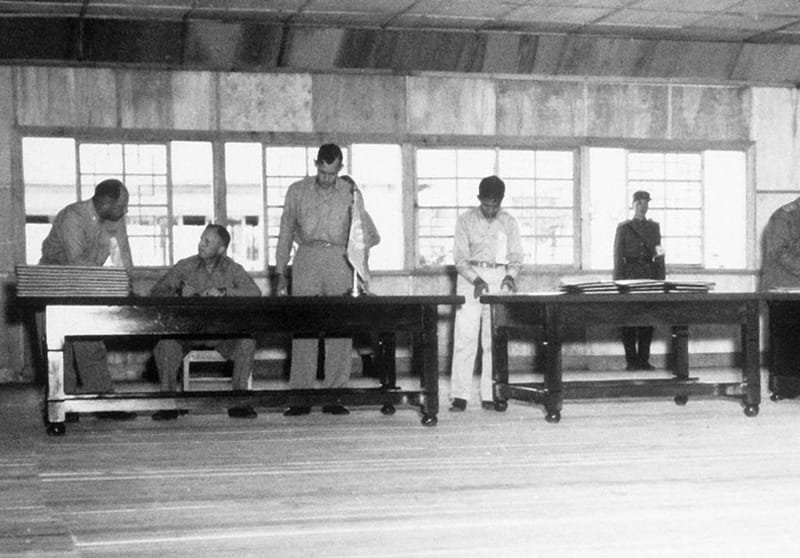
Although the war ended in 1953 with an armistice agreement, no formal peace treaty was ever signed. As a result, the Korean Peninsula technically remains in a state of war today.
The demilitarized zone (DMZ) that separates North and South Korea remains one of the most heavily fortified borders in the world.
Top 5 Frequently Asked Questions
Final Thoughts
The causes of the Korean War illustrate how local conflicts can quickly escalate when global powers become involved. What began as a struggle for political control of the Korean Peninsula soon transformed into a major Cold War confrontation involving multiple nations.
At its core, the war was driven by a complex combination of historical grievances, ideological rivalry, leadership ambitions, and geopolitical strategy. The division of Korea created two competing states with incompatible political systems, while the broader Cold War environment encouraged confrontation rather than compromise.
The legacy of the Korean War remains visible today. The peninsula is still divided, the DMZ remains a symbol of unresolved tensions, and the conflict continues to shape security dynamics in East Asia.
Understanding these historical causes is essential for interpreting modern international relations and recognizing how political decisions, ideological conflict, and strategic competition can lead to devastating consequences.
Resources
- Office of the Historian, U.S. Department of State
- BBC History: Korean War
- National WWII Museum
- Cumings, Bruce. The Korean War: A History. Modern Library.
- Stueck, William. The Korean War: An International History. Princeton University Press.
- Strategic Bombing in the Korean War - March 14, 2026
- MiG Alley - March 13, 2026
- The Air War in Korea (1950–1953) - March 12, 2026