Strategic Bombing in the Korean War: How the Korean War Bombing Campaign Reshaped Modern Air Power
Article Summary
The Korean War bombing campaign marked one of the most intense aerial bombardment operations in modern military history. Conducted primarily by United Nations forces led by the United States, the campaign targeted military infrastructure, transportation networks, supply lines, and industrial centers across North Korea. Over the course of the war, air power evolved from close air support to a massive strategic bombing effort aimed at crippling North Korea’s capacity to wage war. This article explores the strategic objectives, major phases, technologies used, and long-term consequences of the Korean War bombing campaign, highlighting how the conflict reshaped doctrines of strategic air warfare and influenced military strategy during the Cold War.
Table of Contents
- Background of the Korean War Air Campaign
- Origins of the Korean War Bombing Campaign
- Strategic Goals of the Bombing Campaign
- Primary Targets and Military Infrastructure
- Aircraft and Technology Used in the Campaign
- Major Phases of the Korean War Bombing Campaign
- Impact on North Korean Cities and Infrastructure
- Ethical and Strategic Controversies
- Lessons for Modern Strategic Air Warfare
- Top 5 Frequently Asked Questions
- Final Thoughts
- Resources
Background of the Korean War Air Campaign
The Korean War erupted on June 25, 1950 when North Korean forces crossed the 38th parallel and invaded South Korea. The conflict quickly transformed into a global Cold War confrontation involving the United Nations, led by the United States, against North Korea and later China. From the earliest days of the war, air power became one of the most decisive advantages held by United Nations forces. Unlike World War II, where both sides fielded large air forces, North Korea and China lacked comparable strategic aviation capability. This imbalance allowed the United States Air Force and allied forces to establish air superiority within weeks of the invasion. With control of the skies secured, military planners turned to a familiar doctrine refined during World War II: strategic bombing. The goal was straightforward but ambitious—destroy the enemy’s ability to sustain warfare by targeting transportation networks, supply depots, factories, and communication systems. The Korean War bombing campaign soon expanded into one of the largest sustained air bombardment efforts since World War II. Over the course of the conflict, UN forces dropped hundreds of thousands of tons of bombs on North Korea, fundamentally altering the country’s landscape and infrastructure.
Origins of the Korean War Bombing Campaign
The origins of the Korean War bombing campaign trace directly to lessons learned during World War II. Military strategists had seen how bombing operations against Germany and Japan disrupted industrial production and weakened enemy logistics. By 1950, American air doctrine placed heavy emphasis on strategic air power as a decisive instrument of war. Initially, however, the air war in Korea focused on close air support. UN forces defending the Pusan Perimeter required immediate aerial assistance to halt North Korean advances. Fighter-bombers attacked tanks, artillery, and troop concentrations along the front lines. As the war stabilized and UN forces pushed northward after the Inchon landing in September 1950, the mission expanded. Strategic planners believed that bombing North Korea’s infrastructure could collapse its ability to supply troops at the front. Bridges, railways, power stations, and industrial centers became priority targets. The objective was not simply tactical disruption but systemic collapse of the enemy’s war economy. When Chinese forces entered the war in late 1950, the bombing campaign intensified further. UN air forces sought to disrupt Chinese supply lines entering North Korea, creating one of the most aggressive aerial interdiction efforts of the Cold War.
Strategic Goals of the Bombing Campaign
The Korean War bombing campaign pursued several overlapping strategic objectives. First, commanders aimed to cripple North Korea’s logistical network. The mountainous terrain of the Korean Peninsula made transportation infrastructure especially vulnerable. Rail lines, bridges, and roads formed the backbone of military supply. Destroying these routes could isolate front-line units and reduce their combat effectiveness. Second, the campaign sought to destroy industrial production. Factories producing weapons, ammunition, and military equipment became frequent targets. Power plants and hydroelectric dams were also attacked to disrupt electricity supplies. Third, strategic bombing served as a psychological weapon. Military leaders hoped sustained bombardment would erode enemy morale and pressure political leadership toward negotiation. Fourth, the campaign aimed to slow Chinese reinforcement. Chinese troops depended heavily on rail networks and supply depots inside North Korea. Bombing these systems forced them to rely on slower and more vulnerable transport methods. These goals reflected broader Cold War thinking. Air power was increasingly viewed as a tool capable of shaping entire wars rather than simply supporting ground operations.
Primary Targets and Military Infrastructure
During the Korean War bombing campaign, several categories of targets dominated aerial strike planning. Transportation networks represented the most frequent targets. Railways were critical to North Korean logistics, and UN forces devoted enormous effort to destroying rail bridges and junctions. Bomber formations repeatedly attacked these points to prevent repair crews from restoring them. Industrial facilities were another major focus. Factories in cities such as Pyongyang, Wonsan, and Chongjin produced munitions, military vehicles, and communications equipment. Destroying these facilities aimed to degrade the North Korean war economy. Hydroelectric dams became strategic targets later in the war. These dams powered much of North Korea’s electrical grid and supported industrial production. Attacks on these installations caused widespread power outages. Urban centers themselves often suffered extensive damage due to their concentration of industrial and logistical assets. As the war progressed, many North Korean cities experienced heavy bombardment that destroyed large portions of urban infrastructure. Military installations such as airfields, supply depots, and barracks also remained constant targets. Eliminating these facilities limited the enemy’s operational capacity and reduced its ability to launch counterattacks.
Aircraft and Technology Used in the Campaign
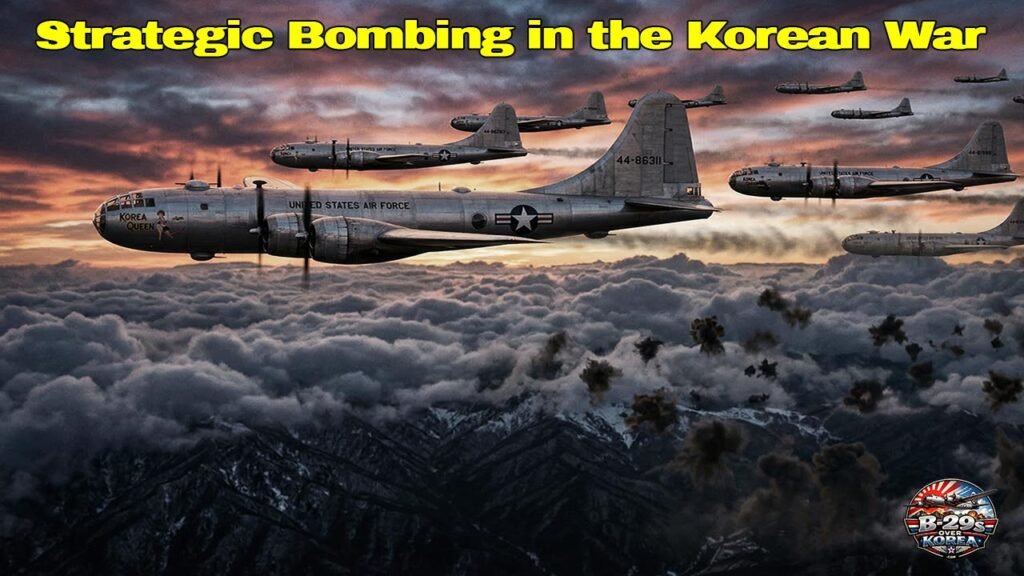
The Korean War bombing campaign showcased a mix of World War II–era aircraft and emerging jet technology. The Boeing B-29 Superfortress played a central role in strategic bombing operations. Originally designed for long-range missions in the Pacific theater during World War II, the B-29 possessed the range and payload capacity necessary for large-scale bombardment missions over North Korea. Fighter-bombers such as the F-80 Shooting Star and the F-84 Thunderjet provided tactical strike capability. These jets attacked transportation routes, supply convoys, and front-line positions. The conflict also introduced the famous air-to-air battles between the F-86 Sabre and the Soviet-built MiG-15. While these engagements occurred primarily in the skies over “MiG Alley” near the Chinese border, they indirectly influenced the bombing campaign by determining who controlled the airspace. Napalm became one of the most widely used weapons during the campaign. This incendiary weapon proved effective against troop concentrations and fortified positions but also caused extensive destruction in urban areas. Advances in radar bombing and aerial navigation improved targeting accuracy compared with earlier wars. However, mountainous terrain and frequent cloud cover often complicated bombing operations.
Major Phases of the Korean War Bombing Campaign
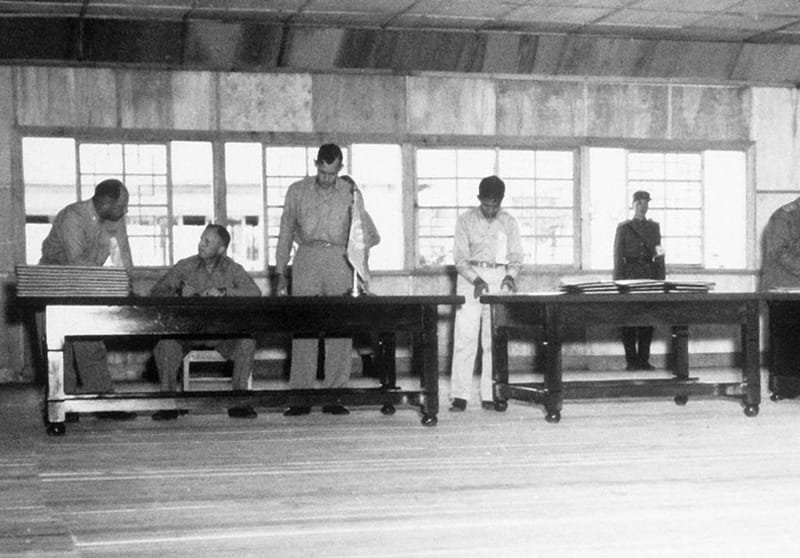
The Korean War bombing campaign unfolded in several distinct phases. The first phase occurred during the defensive struggle of mid-1950. Air forces focused primarily on supporting ground troops and slowing the North Korean advance. The second phase began after the successful Inchon landing. As UN forces advanced into North Korea, bombing operations expanded dramatically. Strategic targets across the country came under attack as planners sought to dismantle the North Korean war machine. The third phase emerged after Chinese intervention in late 1950. With the front lines stabilizing near the 38th parallel, the war shifted toward attrition. Air power became the primary tool for pressuring enemy forces. During the final phase from 1951 to 1953, bombing operations intensified against infrastructure and industrial facilities. Large-scale attacks on dams, power plants, and transportation networks sought to force North Korea and China into ceasefire negotiations. These sustained operations continued until the armistice agreement was signed in July 1953.
Impact on North Korean Cities and Infrastructure
The impact of the Korean War bombing campaign on North Korea was immense. Many major cities experienced widespread destruction. Industrial districts, rail yards, and government facilities were frequently targeted, but surrounding urban areas often suffered collateral damage. Transportation networks endured constant disruption. Bridges were destroyed repeatedly, and rail lines required continuous repair. The need to rebuild these systems forced North Korean and Chinese forces to devote large numbers of personnel to logistics maintenance. Electrical infrastructure also suffered significant damage. Attacks on hydroelectric dams and power stations caused blackouts that hindered industrial production. The overall effect was severe economic and infrastructural devastation across much of North Korea. Even decades later, historians continue to debate the long-term consequences of this destruction.
Ethical and Strategic Controversies
The Korean War bombing campaign remains one of the most debated aspects of the conflict. Critics argue that the scale of bombing caused excessive civilian suffering. Many urban areas were heavily damaged, raising questions about proportionality and the ethical limits of strategic bombing. Supporters counter that strategic bombing represented a legitimate military strategy during a total war environment. They argue that destroying logistical infrastructure shortened the war and saved lives among UN ground forces. Another controversy involves the use of incendiary weapons such as napalm. These weapons proved militarily effective but generated intense moral debate due to their destructive impact. These debates continue to shape modern discussions about air warfare and the rules governing armed conflict.
Lessons for Modern Strategic Air Warfare
The Korean War bombing campaign provided critical lessons that influenced military strategy for decades. One lesson involved the limits of air power. Despite massive bombing efforts, the campaign alone could not force North Korea or China to surrender. Ground forces and political negotiations remained essential to ending the war. Another lesson concerned logistical resilience. Even with constant bombardment, enemy forces often repaired railways and bridges quickly. This demonstrated the difficulty of permanently disabling infrastructure. The conflict also highlighted the importance of air superiority. Control of the skies allowed UN forces to conduct sustained bombing operations with relatively limited interference. Finally, the Korean War demonstrated how strategic bombing could shape geopolitical conflicts during the Cold War. Air power became a central element of military planning in subsequent conflicts, including the Vietnam War.
Top 5 Frequently Asked Questions
Final Thoughts
The Korean War bombing campaign stands as a defining moment in the evolution of strategic air warfare. Conducted at a scale rarely seen since World War II, the campaign demonstrated both the power and limitations of aerial bombardment in modern conflict. Air superiority allowed United Nations forces to strike deep into North Korea’s infrastructure, crippling transportation networks, damaging industrial production, and shaping the strategic environment of the war. Yet the campaign also revealed that even massive bombing operations cannot guarantee decisive victory on their own. Instead, the Korean War showed that air power works best when integrated with ground strategy, logistics planning, and diplomatic negotiation. These lessons continue to influence military doctrine today, making the Korean War bombing campaign a crucial chapter in the history of modern warfare.
Resources
- U.S. Air Force Historical Studies Office – Korean War Air Operations
- Cumings, Bruce. The Korean War: A History
- Crane, Conrad. American Airpower Strategy in Korea
- U.S. National Archives – Korean War Strategic Bombing Records
- Office of the Historian, U.S. Department of State

- Strategic Bombing in the Korean War - March 14, 2026
- MiG Alley - March 13, 2026
- The Air War in Korea (1950–1953) - March 12, 2026