Leadership Beyond Fear in High-Stakes Aviation
The words of 1st Lt. Charles R. Bennett, Navigator, 19th Bomb Group, 1951, capture a timeless principle of operational leadership: when the mission begins, fear becomes irrelevant and disciplined execution takes over. This article explores the leadership, crew coordination, and innovation management lessons embedded in that single sentence—and why they remain critically relevant in today’s high-risk, high-performance environments.
Table of Contents
- Historical Context: The 19th Bomb Group in 1951
- The Psychology of Fear in Combat Aviation
- Role Clarity and Mission Discipline
- Crew Coordination and High-Reliability Teams
- Innovation Management Under Extreme Conditions
- Leadership Lessons for Modern Organizations
- Risk Management and Decision Velocity
- Building a Culture That Brings Everyone Home
- Applying 1951 Lessons to 2026 Technology Teams
- Conclusion: Courage Is a Process, Not a Feeling
- Top 5 Frequently Asked Questions
- Resources
Historical Context: The 19th Bomb Group in 1951
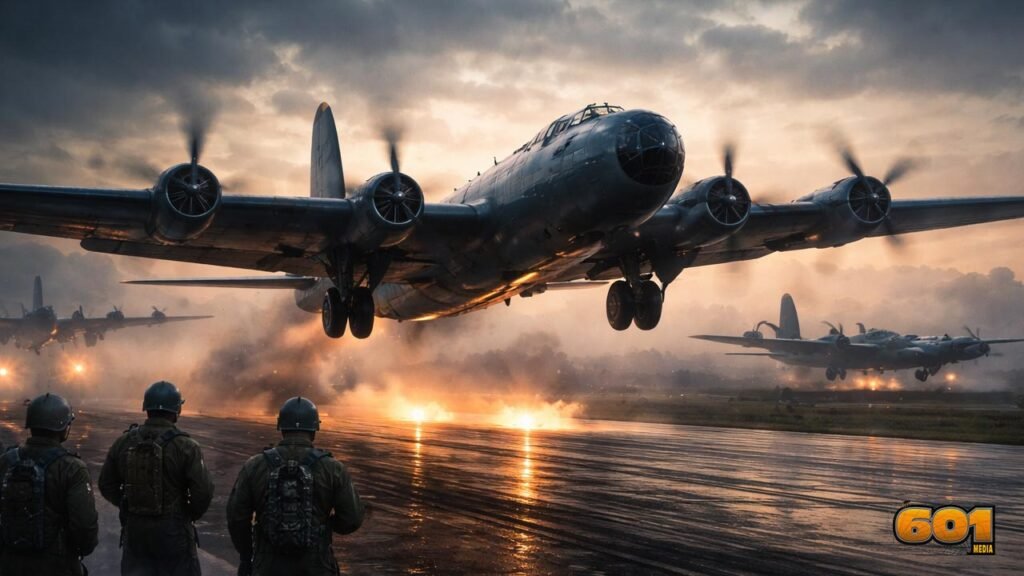
“You didn’t think about fear once the wheels left the runway. Your job was to do your part and bring the crew home.” — 1st Lt. Charles R. Bennett, Navigator, 19th Bomb Group, 1951.
In 1951, the 19th Bomb Group was flying combat missions during the Korean War. These crews operated the B-29 Superfortress in contested airspace, facing anti-aircraft fire, MiG-15 interceptors, severe weather, and long-range navigation challenges. Survival was not guaranteed. Success depended on coordination, precision, and disciplined execution.
The B-29 was a technological marvel of its time. It featured pressurized cabins, remote-controlled gun turrets, and advanced bombing systems. Yet, despite technological sophistication, survival hinged on human performance. Each crew member—pilot, navigator, bombardier, engineer, gunners—had defined responsibilities. If one failed, all were exposed.
Bennett’s quote reflects a cultural norm in combat aviation: once committed to flight, hesitation dissolves into process. There is no bandwidth for fear. Only procedure.
This mindset formed the foundation of high-reliability aviation operations and remains relevant in modern aerospace, cybersecurity, healthcare, and advanced manufacturing.
The Psychology of Fear in Combat Aviation
Fear is a biological response to perceived threat. Neuroscience research confirms that acute stress activates the amygdala and triggers fight-or-flight reactions. However, elite performers train to prevent fear from impairing cognition.
In aviation psychology, task saturation is the enemy. When workload exceeds cognitive capacity, error rates spike. Studies conducted by NASA’s Human Factors Division show that structured checklists and defined crew roles significantly reduce cognitive overload during high-stress scenarios.
Bennett’s quote illustrates a critical psychological transition: anticipation anxiety occurs before action. Once action begins, procedural memory dominates.
This transition is supported by research on performance under stress. The American Psychological Association notes that trained individuals rely on muscle memory and rehearsed protocols when facing extreme pressure. In other words, training overrides panic.
Combat aviators in 1951 did not eliminate fear. They deferred it. The mission replaced the emotion.
This insight applies to modern technology leaders managing cyber incidents, product failures, or crisis communications. Once “the wheels leave the runway,” emotional rumination must yield to execution.
Role Clarity and Mission Discipline
“Your job was to do your part.”
This phrase highlights role clarity—one of the most powerful performance multipliers in complex systems.
In the B-29 crew structure, responsibilities were not abstract. The navigator calculated headings, corrected for wind drift, and ensured accurate positioning over target. A small miscalculation could mean fuel exhaustion or mission failure.
Modern management science confirms the value of role clarity. Research from Gallup shows that employees who clearly understand their expectations are 2.5 times more likely to be engaged at work.
In high-stakes operations, ambiguity kills performance.
Innovation and technology management often suffer from diffuse accountability. When product teams lack clarity about who owns architecture decisions, security protocols, or deployment timelines, execution slows and risk increases.
The 19th Bomb Group operated under no such ambiguity. Precision roles enabled coordinated action.
Mission discipline means:
- Clear objectives
- Defined responsibilities
- Standard operating procedures
- Accountability for execution
These are not bureaucratic constraints. They are survival mechanisms.
Crew Coordination and High-Reliability Teams
Bringing the crew home required more than individual competence. It required interdependence.
High-reliability organizations (HROs)—such as aviation units, nuclear facilities, and aircraft carriers—share common traits:
- Preoccupation with failure
- Reluctance to simplify
- Sensitivity to operations
- Commitment to resilience
- Deference to expertise
The 19th Bomb Group embodied these principles decades before the term HRO became mainstream in organizational theory.
Crew Resource Management (CRM), formalized later in the 1970s after NASA research, codified what combat crews already practiced: open communication, cross-checking, and mutual accountability.
When Bennett says “bring the crew home,” he signals collective responsibility. The mission was not individual heroism. It was synchronized competence.
In today’s innovation ecosystems, cross-functional collaboration mirrors this model. Software engineers, UX designers, data scientists, and cybersecurity specialists operate like flight crew members. One flawed assumption can cascade across the system.
High-performing teams replace ego with execution.
Innovation Management Under Extreme Conditions
The B-29 itself represented radical innovation. Developed during World War II, it incorporated pressurization, advanced avionics, and long-range capabilities that were unprecedented at the time.
Innovation management in military aviation demanded:
- Rapid iteration
- Field adaptation
- Continuous learning
- Feedback loops from missions
Combat conditions accelerated improvement cycles. Failures were analyzed quickly. Lessons were integrated into subsequent missions.
Modern innovation management follows similar patterns:
- Agile methodology
- DevOps integration
- Continuous deployment
- Real-time data analytics
The difference is not structural—it is contextual.
The combat crews of 1951 operated in an environment where iteration could cost lives. Today’s tech leaders operate in markets where iteration costs capital, brand trust, or cybersecurity exposure.
The principle remains: performance under pressure demands structured innovation.
Fear cannot dominate the cycle.
Leadership Lessons for Modern Organizations
Bennett’s quote provides four essential leadership insights:
1. Commitment eliminates hesitation.
Once launched, second-guessing ends.
2. Execution outranks emotion.
Leaders must compartmentalize anxiety during operations.
3. Shared mission builds cohesion.
Teams perform best when outcomes are collective.
4. Accountability is individual and mutual.
Do your part—because others depend on it.
Harvard Business Review research on crisis leadership emphasizes decisiveness and clarity. Leaders who communicate specific roles during disruption outperform those who rely on inspirational rhetoric alone.
Combat aviation was not fueled by motivational speeches mid-flight. It was fueled by trust in training.
Modern leaders often confuse inspiration with preparation. Bennett’s insight reminds us that preparation is the true antidote to fear.
Risk Management and Decision Velocity
Risk in 1951 was kinetic and immediate. Anti-aircraft fire, mechanical failure, fuel miscalculation—each carried fatal consequences.
Today, risk in innovation environments may be digital, financial, or reputational. Yet the structural mechanics of risk management remain similar:
- Identify hazards
- Assess probability
- Mitigate exposure
- Monitor continuously
Decision velocity becomes critical once action begins. Research from McKinsey & Company indicates that organizations that make and execute decisions quickly outperform peers in both revenue growth and innovation success rates.
Combat crews could not pause mid-air to re-evaluate strategy at length. They relied on training, checklists, and delegated authority.
Decision velocity without chaos requires:
- Pre-defined authority structures
- Scenario planning
- Redundant systems
- Trust in expertise
When the wheels leave the runway, governance must already be established.
Building a Culture That Brings Everyone Home
“Bring the crew home” is not merely operational. It is cultural.
Psychological safety—popularized by research from Amy Edmondson at Harvard—demonstrates that teams perform better when members feel safe to speak up. In aviation, silence can kill. Junior crew members must be empowered to question decisions if data suggests error.
Combat aviation culture encouraged corrective input when necessary. Authority existed, but expertise overruled hierarchy when survival demanded it.
In modern technology firms, a similar culture is essential. Cybersecurity analysts must feel empowered to halt deployment if vulnerabilities appear. Engineers must challenge flawed architecture decisions without fear of retaliation.
Bringing the crew home in 2026 means:
- Zero tolerance for avoidable risk
- Encouragement of upward feedback
- Clear after-action reviews
- Institutional learning
The objective is not perfection. It is survivability.
Applying 1951 Lessons to 2026 Technology Teams
Innovation today unfolds in artificial intelligence, autonomous systems, biotechnology, and advanced aerospace.
These sectors share characteristics with 1951 combat aviation:
- High uncertainty
- High stakes
- Complex systems
- Time-sensitive decisions
Leaders managing AI deployment or aerospace startups must internalize Bennett’s principle. Fear of failure can paralyze innovation. Yet reckless action without preparation is equally dangerous.
The solution is structured courage:
- Rigorous testing
- Defined roles
- Clear escalation paths
- Continuous monitoring
Operational readiness transforms anxiety into action.
Once a product launches, hesitation must yield to disciplined execution. Teams must rely on architecture decisions, security frameworks, and data validation protocols already established.
Courage is not bravado. It is preparation meeting responsibility.
Conclusion: Courage Is a Process, Not a Feeling
The most powerful takeaway from 1st Lt. Charles R. Bennett’s words is this: courage is procedural.
Fear does not disappear. It becomes irrelevant once disciplined action begins.
In 1951, that mindset kept crews alive over hostile territory. In 2026, it keeps organizations resilient in volatile markets.
Leadership in innovation and technology management demands:
- Clarity before commitment
- Training before crisis
- Structure before speed
- Trust before turbulence
When the wheels leave the runway—whether literal or metaphorical—your preparation determines your performance.
Do your part.
Protect the mission.
Bring the crew home.
Top 5 Frequently Asked Questions
Resources

- Inside Two Wars: The Untold Stories of B‑29 Airmen - March 9, 2026
- B‑29 Museums in the U.S. - March 7, 2026
- The Enduring Power of USA Air Superiority - March 5, 2026